
Coffee is Sweet
Menu
Origin Profile

Brazil

Brazil in the cup

A short read

Taste it on the page first: notes, landscape, process, then how to spot the bag.

For people who already brew

Terroir, farmers, altitude, and a brew that fits this origin - plus how the process shapes the cup.

The origin guide

Producer story, harvest, variety, and process detail. Empty still means we will not guess a farm we cannot name.

What it is like

A cozy, low-acid cup that often tastes like milk chocolate, toasted nuts, and caramel. A gentle place to start if cafe lattes are what you drink now.

Cerrado Mineiro and other large producing regions such as Sul de Minas

What to say at the cafe

A medium-roast Brazil, Cerrado or Santos if you have it - chocolate and nut, in a latte.

Milk and serve

  • Black
  • Dairy
  • Oat

In the cup

  • milk chocolate
  • toasted hazelnut
  • caramel
  • peanut brittle
  • low citrus

Round, low-acid, and medium-heavy - closer to cocoa than to juice.

Sensory shape

sweetnesssparklebodyroastlayers
Relative to this catalog, not SCA scores.

Origin landscape

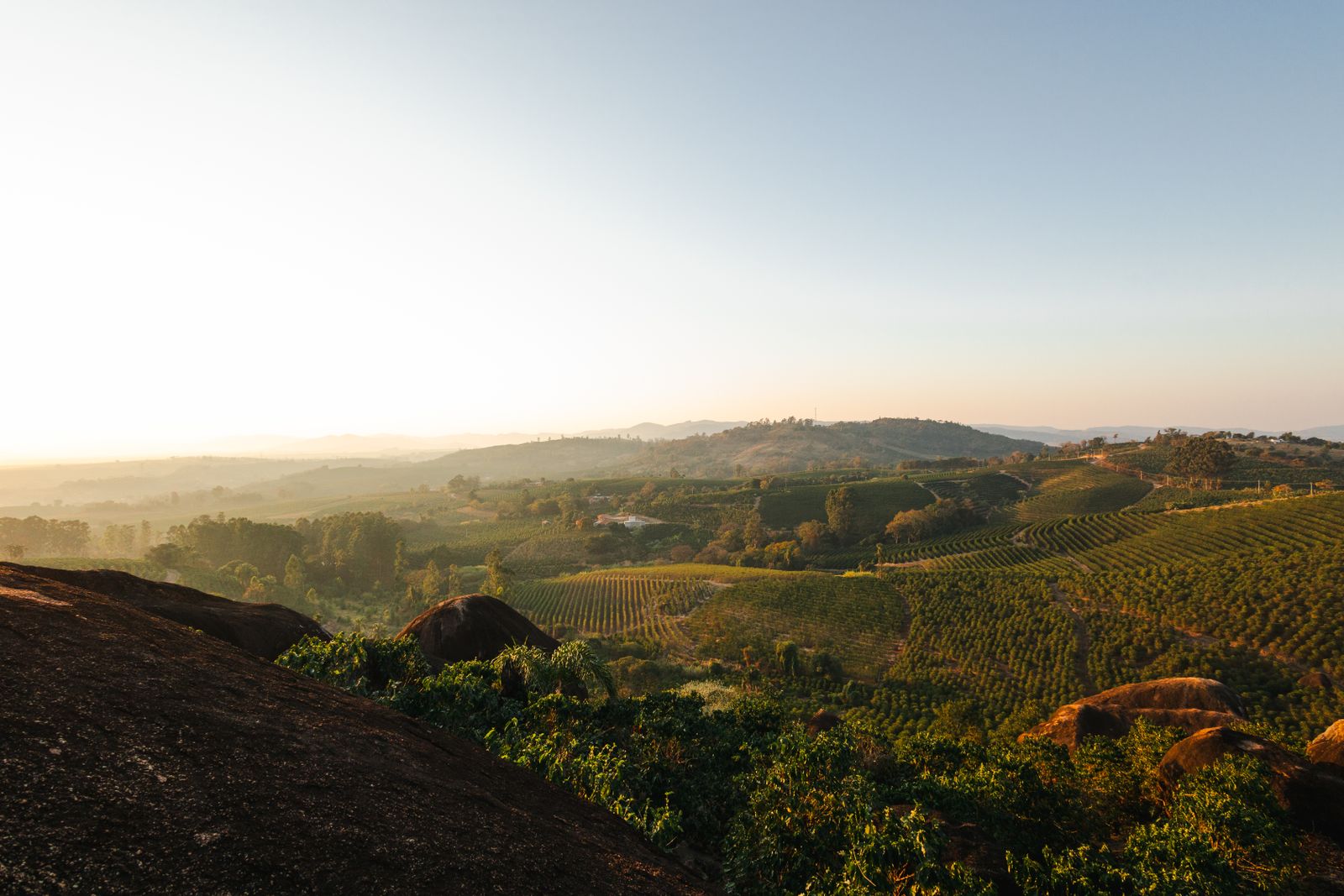
Rows of coffee trees across a rolling plantation landscape in Brazil

Rows of coffee trees across a rolling plantation landscape in Brazil

Elizabeth Ferreira / Pexels · Pexels License

Cerrado is dry in harvest season, with distinct wet and dry periods and relatively even temperatures. Flat or gently rolling plateaus let machines shake ripe cherry from the trees. Soils were corrected for agriculture; the cup’s chocolate and nut come from that climate and from naturals drying in predictable sun, not from volcanic drama.

Farmers and harvest

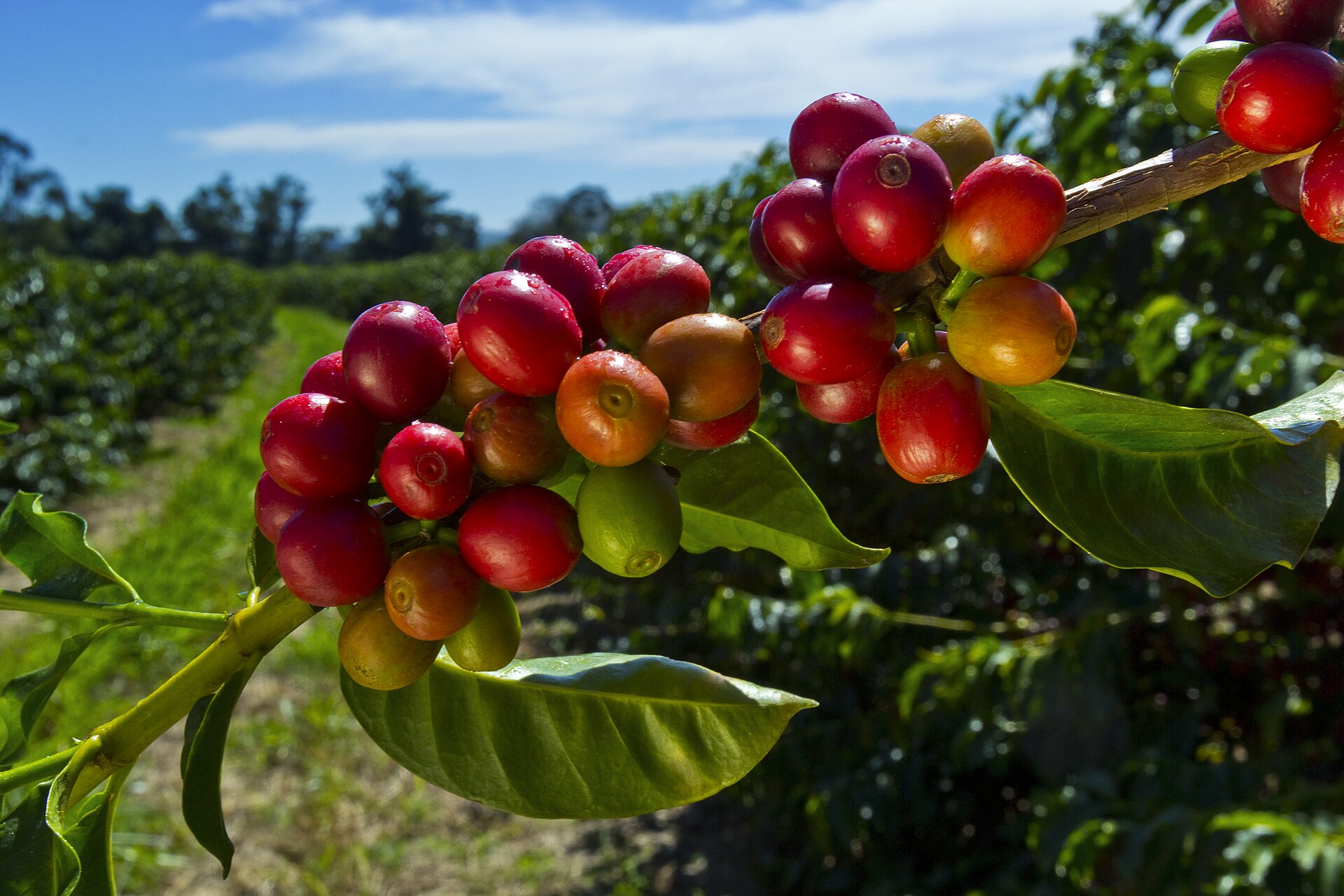
Ripe Mundo Novo coffee cherries ready for harvest

Ripe Mundo Novo coffee cherries ready for harvest

Jonathan Wilkins / Wikimedia Commons · CC BY-SA 3.0

Who grows it

Estate farms and cooperatives in Cerrado Mineiro, often with mechanical harvest.

Who grows it

Unlike East African smallholders delivering cherry to a washing station, many Cerrado producers run their own mill. Names on specialty bags include families around Serra do Salitre and Patrocínio, and members of the Cerrado Coffee Growers Federation. Look for a farm name plus “natural” or “pulped natural” - that is more useful than the old “Santos” grade.

Process

Often natural or pulped natural (a honey-style lot); some washed lots.

Process in detail

Cerrado farms dry whole cherries on patios, then often finish in mechanical dryers - Brazil’s scale makes naturals consistent rather than wild. Pulped natural (cereja descascada) strips the skin but leaves mucilage, a honey-like middle path. Washed Brazils exist, but they are the exception on supermarket and cafe bags.

How the process shapes the cup

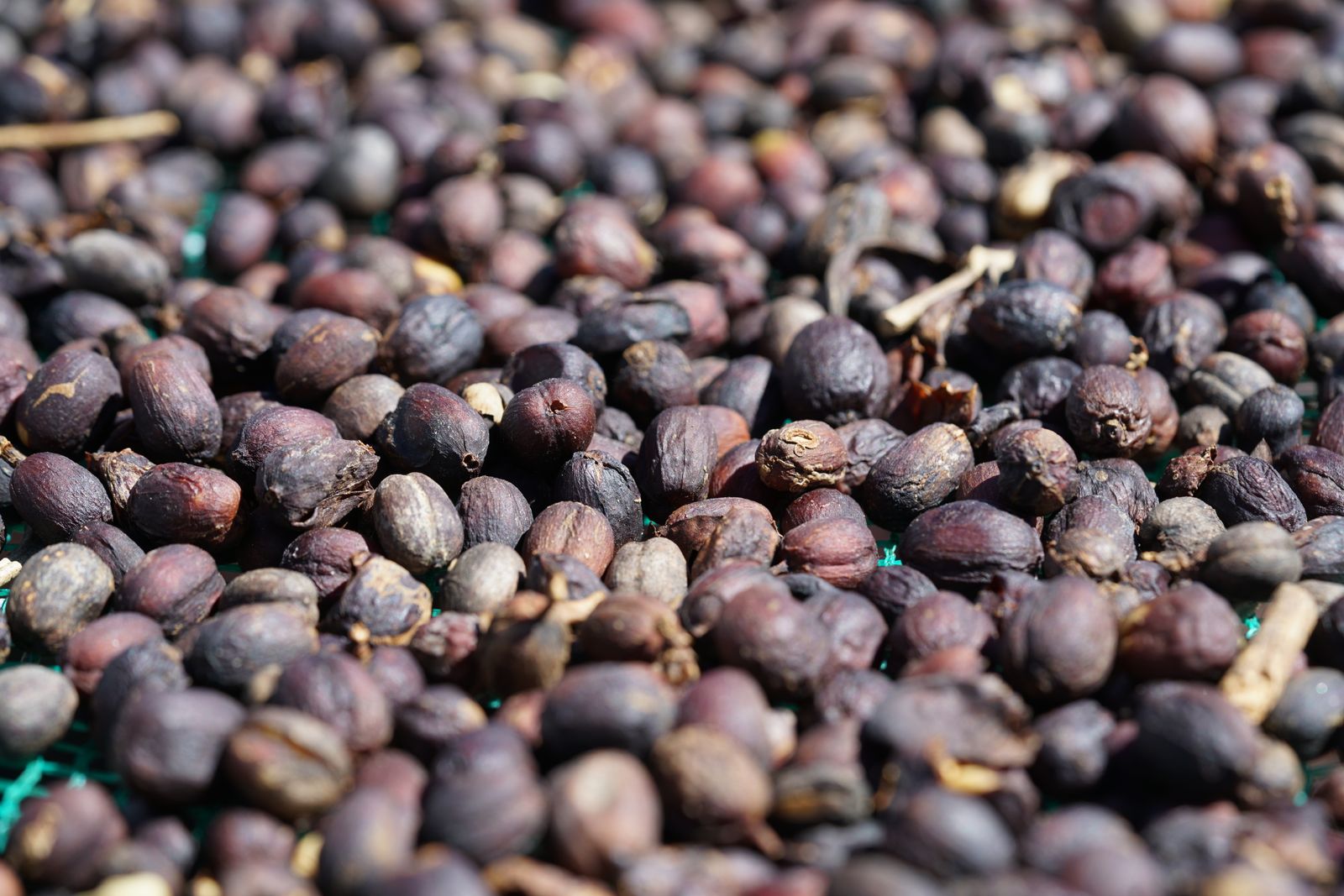
Whole coffee cherries drying on raised racks in the sun

1500m Coffee / Pexels · Pexels License

Natural

Natural

The whole cherry dries in the sun. Fruit sugars stay with the seed, so the cup is heavier and more jammy.

Berry, tropical fruit, wine-like sweetness, and a creamier body.

Sorted ripe cherries are spread on raised beds or patios and turned for two to four weeks until the fruit is raisin-dry. Airflow under African beds matters: stuck cherry ferments unevenly and tastes boozy. Brazil’s Cerrado uses patio and mechanical dryers at lower altitude; Ethiopian Guji and Hambela lots dry slower in cool highlands, which is why blueberry and strawberry show up so often on those bags.
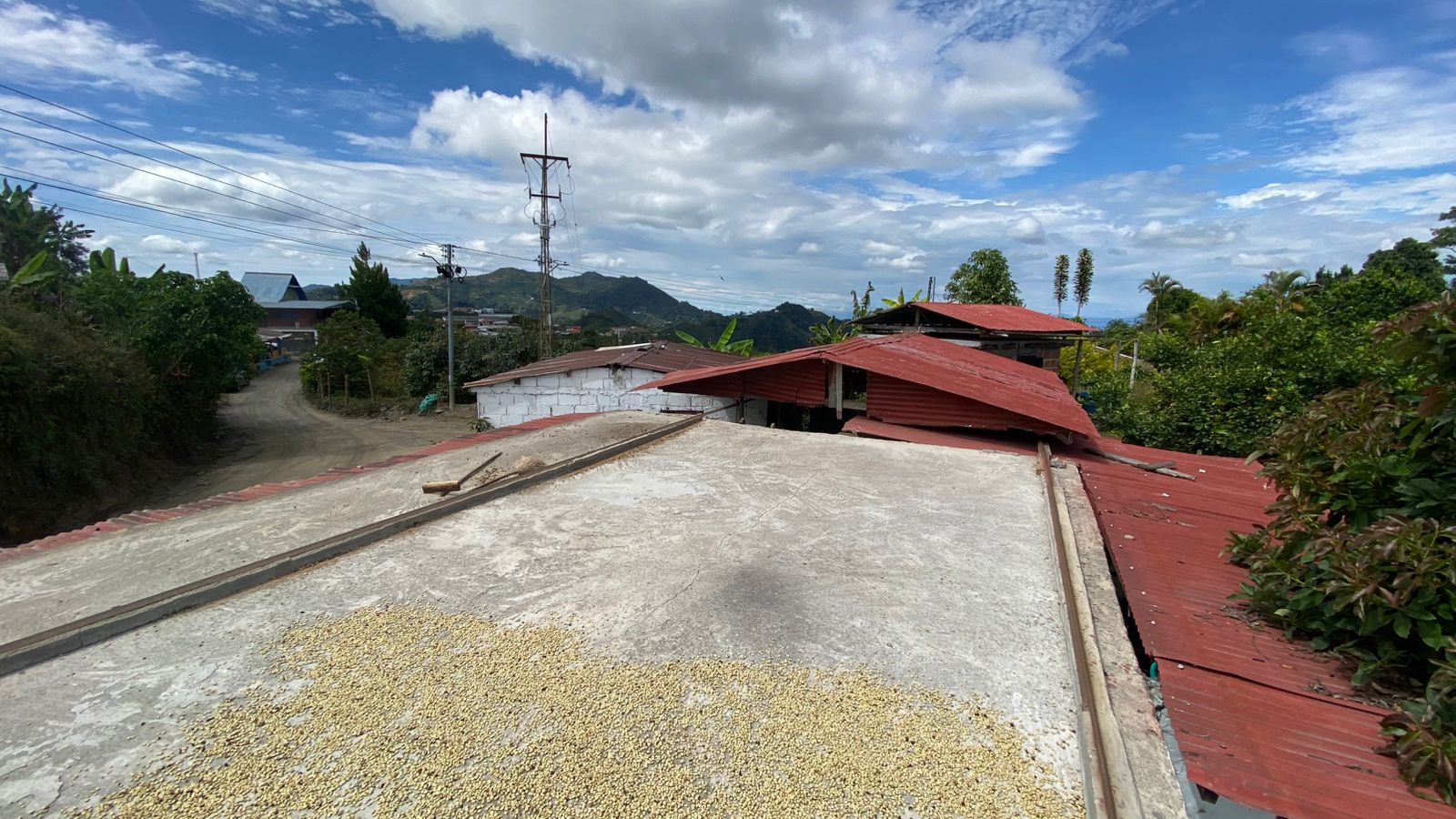
Raised drying beds (helda) used for coffee parchment in Colombia

JPDAFT / Wikimedia Commons · CC0

Honey

Honey

Skin comes off, but sticky mucilage stays on while the seed dries. Sweetness without full natural funk.

Syrupy body, brown-sugar or stone-fruit sweetness, more clarity than a natural.

After pulping, producers leave yellow, red, or black honey - names for how much mucilage remains and how long it dries in shade or sun. Costa Rica and El Salvador made the method famous; Ecuador and Colombia use it on Sidra, Pink Bourbon, and Pacamara lots. Less water than a full wash, more control than a natural. The cup sits between washed sparkle and natural jam.

The story

Brazil grows about a third of the world’s coffee. Cerrado Mineiro is the country’s youngest denomination of origin: a tropical savannah where associations and cooperatives professionalized drying and traceability in the 1980s and 1990s. Championship baristas rarely lead with a Brazil for espresso-course florals; they reach for it when they need sweetness that milk can ride. That is the same reason it is the kindest bag if your current cup is a cafe latte.

Brew

Filter or espresso

French press or espresso with milk shows the cocoa. For filter, a medium grind and a slightly cooler kettle keep it sweet instead of dusty.

How to shop for it

Look for Brazil, Cerrado or Santos, chocolate or nut, medium roast.

On the supermarket shelf

Brazil, Cerrado or Santos, chocolate or nut, medium roast. The chocolate-nut cup is the shopper cue, not a flavored bag.

How to read a bag →

Stomach comfort

Gentler sparkle - a rounder cup for many stomachs.

Sparkle is not the same as stomach feel →

Species

arabica

Altitude

Lower than East African lots - often 800–1,300m

Altitude

Cerrado Mineiro’s protected origin requires Arabica grown above 800m; specialty lots commonly sit 950–1,300m. That is cooler than Santos lowlands, but still warmer than a 2,000m Nariño farm, which is why acidity stays round instead of sparkling.

Varieties

Mundo Novo, Catuaí, Bourbon (when labeled)

Varieties

Mundo Novo (a Sumatra × Bourbon cross) and red or yellow Catuaí dominate Cerrado. Bourbon, Topázio, and Catucaí show up on microlots. These cultivars were bred for yield on flatter land - the chocolate-nut cup is genetics plus lower altitude, not a roast trick.

Harvest

Main harvest roughly May–September, in Brazil’s dry winter.

Harvest calendar

  1. J
  2. F
  3. M
  4. A
  5. M
  6. J
  7. J
  8. A
  9. S
  10. O
  11. N
  12. D

Often arriving at shops now. Southern harvest window. We cannot call a bag fresh without a roast date.

Compare with Another Origin