

Coffee is Sweet
Menu
Origin Profile

Kenya

Kenya in the cup

A short read

Taste it on the page first: notes, landscape, process, then how to spot the bag.

For people who already brew

Terroir, farmers, altitude, and a brew that fits this origin - plus how the process shapes the cup.

The origin guide

Producer story, harvest, variety, and process detail. Empty still means we will not guess a farm we cannot name.

What it is like

Punchy and juicy: blackcurrant, grapefruit, and a syrupy sweetness. Not a gentle starter, but vivid if you like bright fruit.

Central highlands such as Nyeri and Kirinyaga, on the slopes of Mount Kenya

What to say at the cafe

A Kenya, Nyeri or Kirinyaga, light roast, black - the blackcurrant one.

Milk and serve

  • Black

In the cup

  • blackcurrant
  • grapefruit
  • tomato leaf
  • brown sugar
  • black tea

Juicy and syrupy with a long, wine-like acidity - heavy for a washed coffee.

Sensory shape

sweetnesssparklebodyroastlayers
Relative to this catalog, not SCA scores.

Natural sweetness

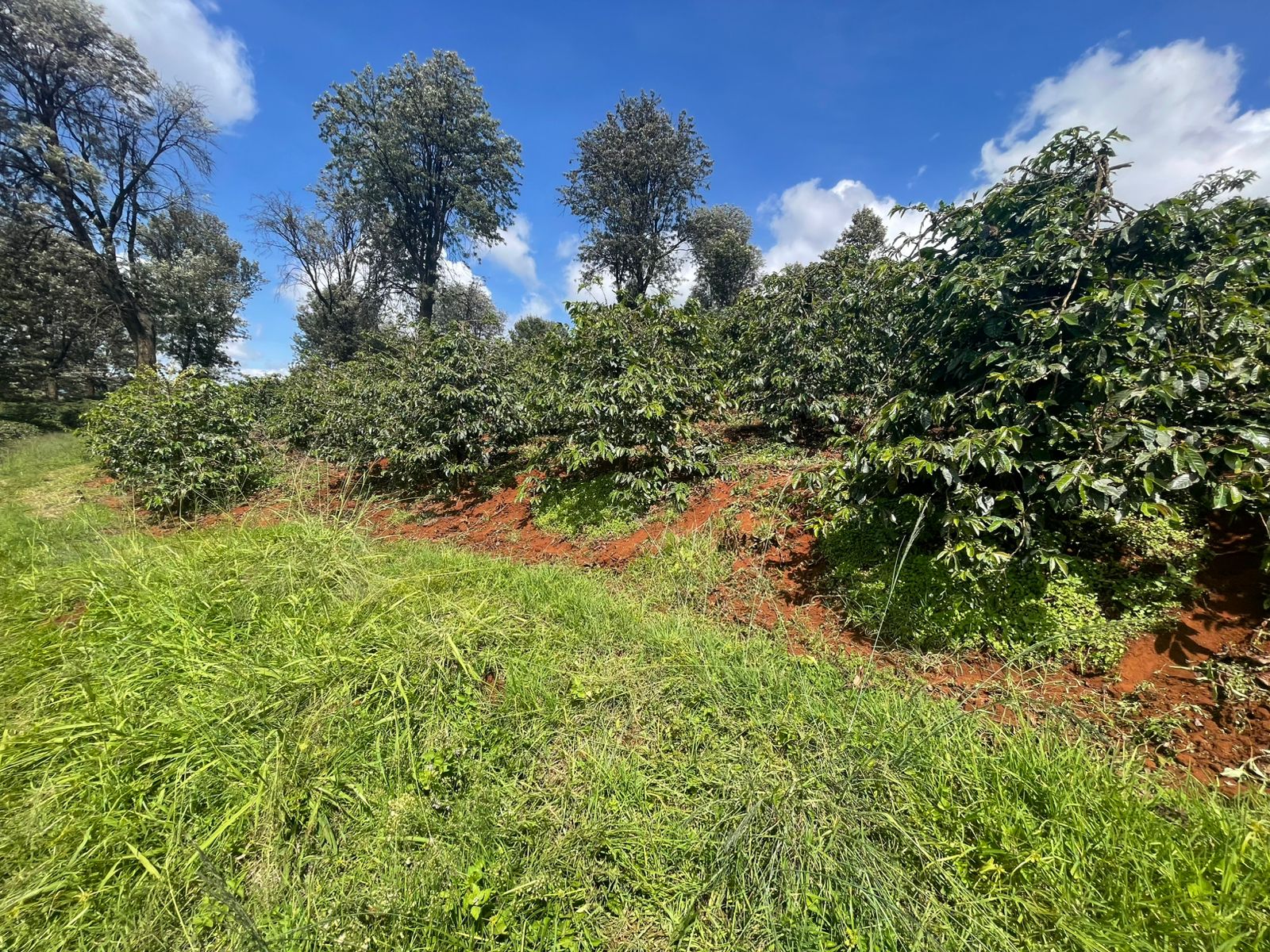
Origin landscape

A coffee plantation in Kiambu County on Kenya’s central highland slopes

A coffee plantation in Kiambu County on Kenya’s central highland slopes

Wikimedia Commons · CC BY-SA 4.0

Volcanic slopes of Mount Kenya: red nitisols, high altitude, two rainy seasons. The coffee belt sits under forest reserve. That geology plus the double-wash protocol is why Kenya does not taste like a washed Colombia even when both are “washed Arabica.”

Farmers and harvest

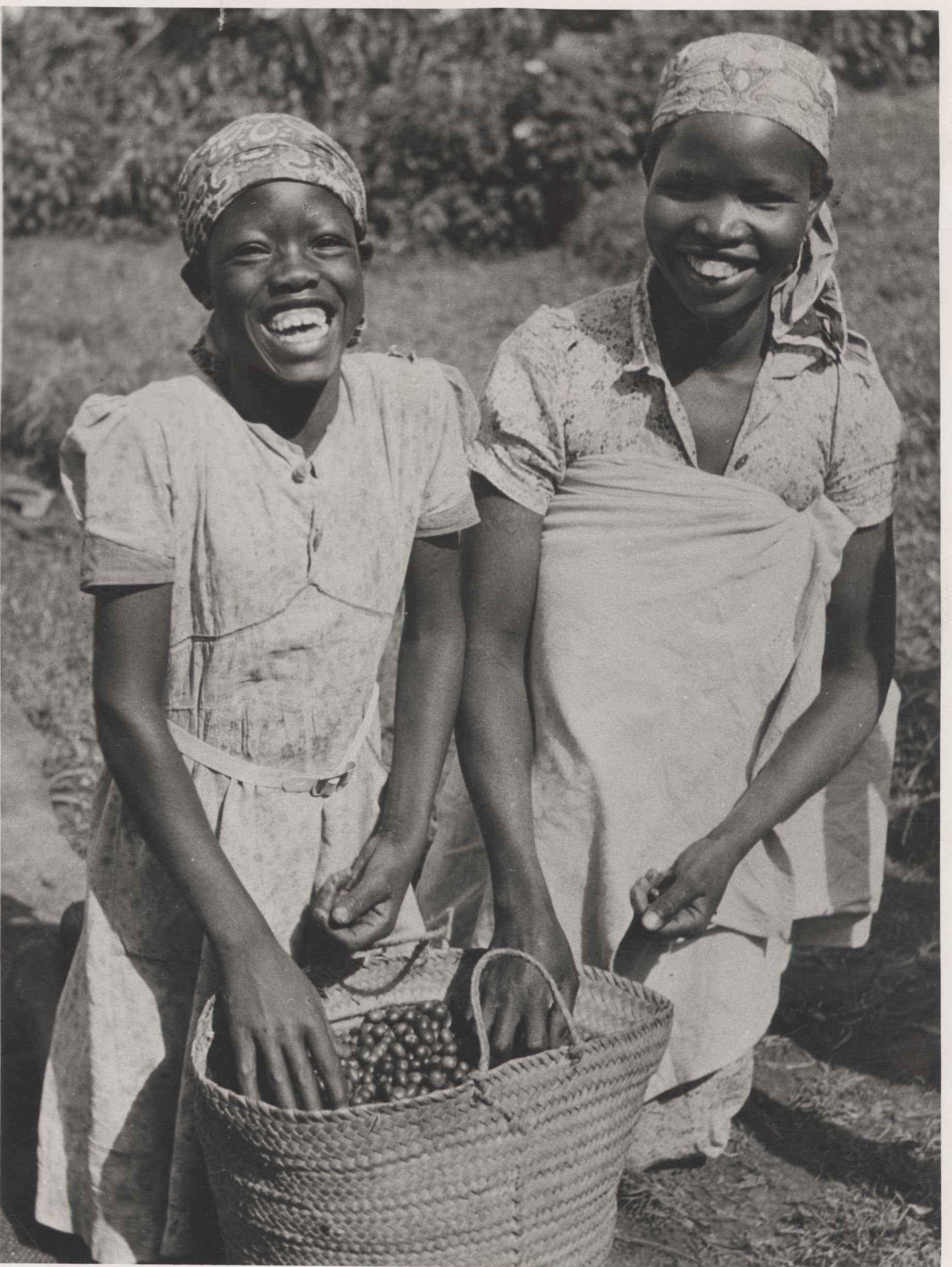
Coffee pickers harvesting ripe cherry on a Kenyan estate

Coffee pickers harvesting ripe cherry on a Kenyan estate

Touring Club Italiano / Wikimedia Commons · Public domain

Who grows it

Smallholder cooperatives delivering to named factories (wet mills).

Who grows it

A typical Nyeri or Kirinyaga lot is hundreds of families, each with a small plot, delivering cherry to a factory owned by a Farmer Cooperative Society. Factory names (Gichathaini, Gititu, Karimikui) are the producer credit. Estates exist around Kiambu; central-highland sparkle more often comes from the co-op system.

Process

Typically double-washed, then soaked, then dried on raised beds.

Process in detail

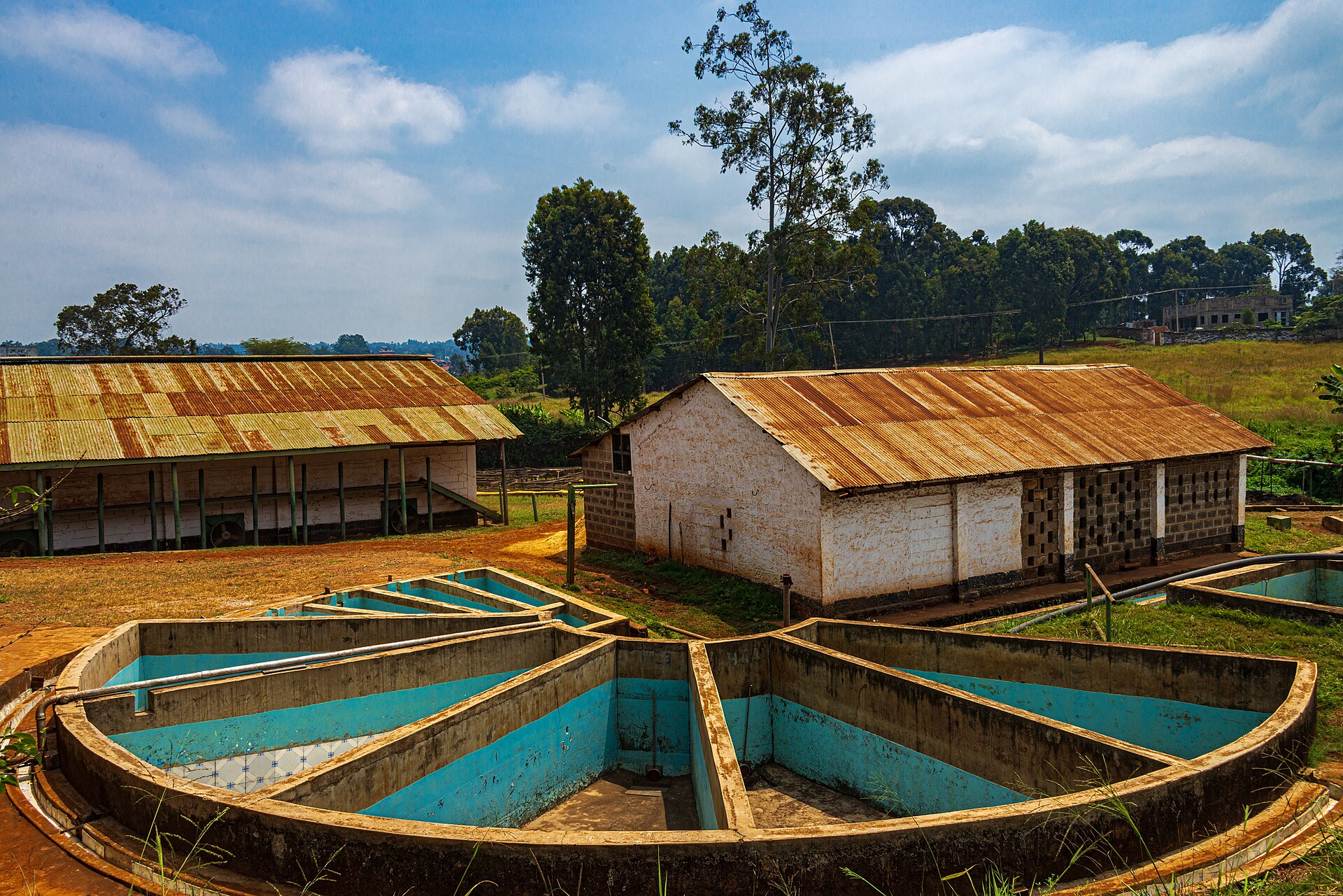
Kenya’s factories pulp cherry, ferment, wash in channels that also grade by density, then soak parchment in clean water for another 12–24 hours. That second soak is the “Kenya wash” - it strips residual pulp and is why the cup is so clean and loud. AA, AB, and PB are screen sizes, not farms.

How the process shapes the cup

Coffee washing pits at a Kenyan estate, where mucilage is rinsed from parchment

Daniel Case / Wikimedia Commons · CC BY-SA 4.0

Washed

Washed

Skin and fruit come off soon after picking. The seed dries in parchment, so the cup stays clean and bright.

Clarity, citrus or floral sparkle, a lighter body than naturals from the same farm.

Ripe cherry is pulped within hours, then fermented in tanks or channels until the sticky mucilage lets go - often 12–36 hours, longer in cool highlands. Kenya adds a second clean-water soak after the wash. Parchment then dries on raised beds or patios to about 10–12% moisture. World Barista Championship routines treat this as the process that lets variety and altitude speak without jammy fruit from the skin.

The story

Kenyan specialty is a cooperative machine: smallholders pick, factories wash, millers screen AA and AB, auctions set prices. Cuppers talk about Kenya the way sommeliers talk about a grape: SL28, Nyeri, double wash. It is not a gentle latte coffee. It is the origin that taught a generation of baristas that fruit in coffee can be savory and sweet at once.

Brew

Filter

Pour-over, plenty of water (1:16 or 1:17) so currant stays juicy instead of sharp. Light roast only.

How to shop for it

Look for Kenya, Nyeri or Kirinyaga, blackcurrant, AA if listed.

On the supermarket shelf

Kenya, Nyeri or Kirinyaga, blackcurrant, AA if listed. AA is a screen size, not a farm.

How to read a bag →

Stomach comfort

Bright sparkle. Perceived acidity is not the same as how your stomach feels.

Sparkle is not the same as stomach feel →

Species

arabica

Altitude

High-grown - often 1,600–2,000m

Altitude

Nyeri and Kirinyaga lots typically sit 1,600–2,000m on volcanic red clay. Mount Kenya and the Aberdares shape rainfall into two wet seasons and two harvests. Cool nights plus volcanic soil are the structural reason Kenyan acidity reads as currant rather than simple lemon.

Varieties

SL28, SL34; Batian and Ruiru 11 on newer lots

Varieties

SL28 and SL34, selected by Scott Agricultural Laboratories, still define the classic blackcurrant cup. Ruiru 11 and Batian were bred for disease resistance; they appear mixed into factory lots. A bag that only says “Kenya AA” is a size grade; SL28/SL34 on the label is the sensory cue.

Harvest

Main crop roughly October–December; fly crop around April–June.

Harvest calendar

  1. J
  2. F
  3. M
  4. A
  5. M
  6. J
  7. J
  8. A
  9. S
  10. O
  11. N
  12. D

Often arriving at shops now. Main and fly-crop windows. We cannot call a bag fresh without a roast date.

Compare with Another Origin